Off-Road Coverage for ADV Riders: What's Actually Covered When the Pavement Ends
By Adventure Bike Insurance
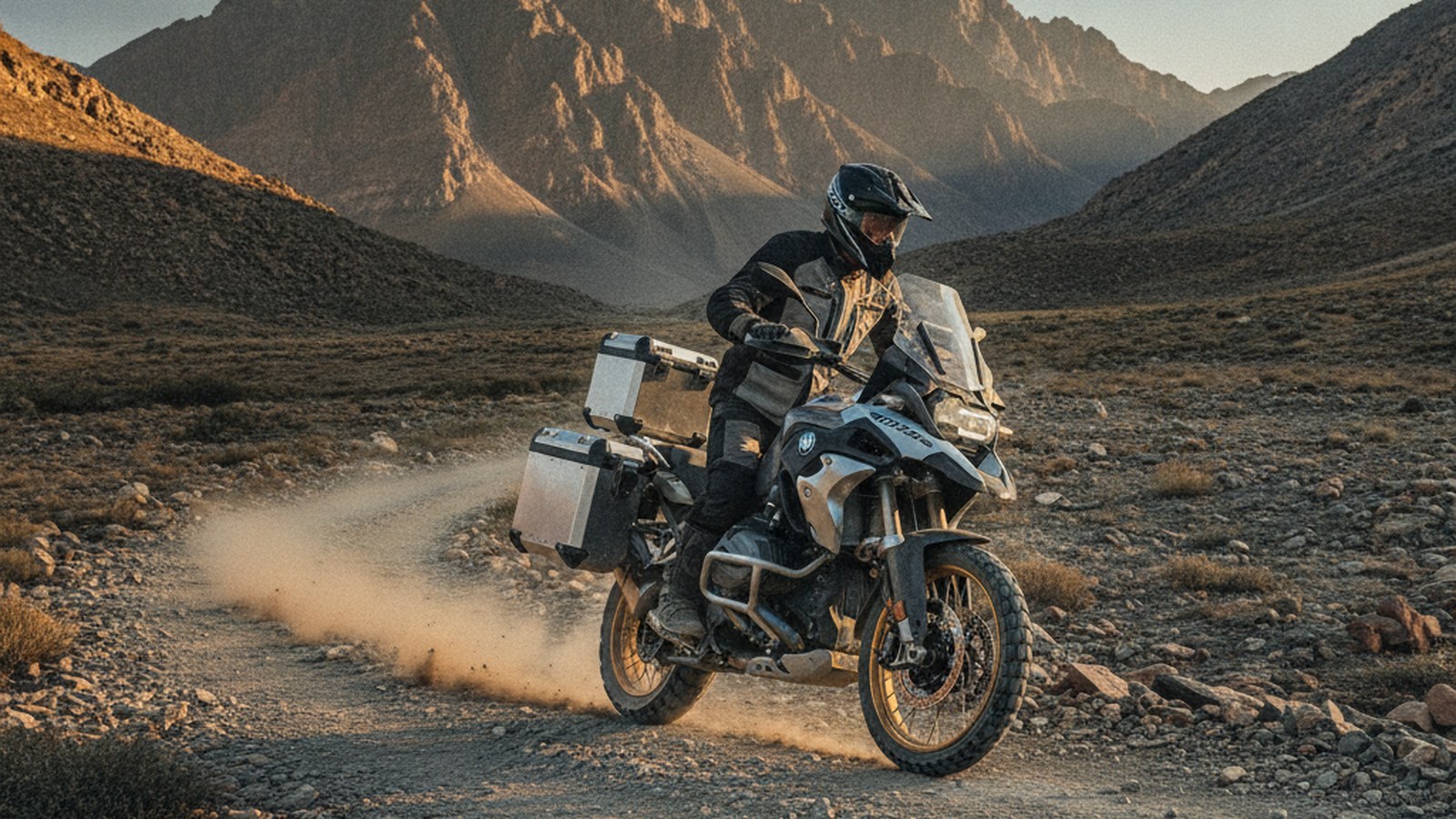
The whole point of an adventure bike is that the pavement is optional. You bought a Yamaha Ténéré 700, a KTM 500 EXC-F, or a BMW F 850 GS precisely so you could turn off the highway, drop tire pressure, and disappear up a fire road. So here's the question every ADV rider should be able to answer with certainty: the moment your tires hit dirt, are you still insured?
For a lot of riders, the honest answer is "I'm not sure" — and that uncertainty is exactly the gap this post is here to close.
Why pavement is the dividing line
Standard motorcycle insurance was built around street bikes ridden on public, paved roads. The actuarial models, the risk assumptions, and very often the policy language itself assume asphalt. Many standard policies either explicitly exclude off-road riding or are simply silent on it — and silence is not your friend at claim time.
When you ride off-pavement without the right coverage, you can run into:
- Denied collision claims if you crash on a trail or fire road
- Denied comprehensive claims for off-road damage (rock strikes, water-crossing damage)
- Arguments over "where" the loss happened — a paved-road policy adjuster looking for a reason to say no
Off-road coverage (also called off-pavement or unpaved-road coverage) is the extension that keeps your physical-damage protection alive when you leave the asphalt.
What "off-road" actually includes
Not all dirt is the same in an underwriter's eyes. Here's a practical breakdown of how different riding surfaces typically map to coverage.
| Riding surface | Typical standard policy | With off-road extension |
|---|---|---|
| Paved public highway | Covered | Covered |
| Graded gravel / county dirt road | Gray area, often disputed | Covered |
| Fire roads & forest two-track | Frequently excluded | Covered |
| Single-track / technical trail | Usually excluded | Covered (recreational) |
| Water crossings, rocky climbs | Usually excluded | Covered (recreational) |
| Organized racing / timed events | Excluded | Excluded — needs event policy |
| Closed-course competition | Excluded | Excluded — needs event policy |
The big takeaway: an off-road extension is built for recreational trail, fire-road, and overland riding — the kind of thing you do on the TransAmerica Trail (TAT), a Backcountry Discovery Route, or a weekend of exploring forest service roads. It is not a substitute for competition coverage.
The competition exclusion — read this twice
This is the single most misunderstood part of off-road coverage, so let's be blunt:
Recreational off-road riding is covered. Racing and timed competition are not.
If you sign up for a hare scramble, a desert race, an enduro event, or any organized timed competition, your standard ADV policy — even with an off-road extension — will almost certainly exclude the damage. Those events require a separate, specialized event or competition policy. Don't assume your trail coverage stretches to the starting gate.
Physical damage off-road: collision vs. comprehensive
Off-road incidents fall into the same two buckets as on-road ones, and it helps to know which is which:
Collision
This covers damage from the bike tipping, falling, or hitting something while you're riding — the classic low-speed fire-road tip-over, the slide-out in a sandy wash, the get-off on a rocky climb. ADV bikes are heavy, and gravity is undefeated. Collision coverage with an off-road extension is what makes those drops a deductible instead of a disaster.
Comprehensive
This covers non-collision damage — and off-road has plenty of it:
- Rock strikes that crack a case or radiator
- Water-crossing damage
- Theft of the bike from a remote campsite or trailhead
- Fire, flood, and falling-object damage on a trip
Where off-road coverage meets the rest of your policy
Off-road riding rarely happens in isolation — it usually comes bundled with remote locations, expensive gear, and a heavily farkled bike. So a real adventure policy pairs the off-road extension with:
- Accessory / custom-parts coverage — your skid plate, crash bars, and panniers are exactly the parts that take the hit in an off-road get-off. Make sure they're scheduled at real value, not a default cap.
- Riding gear coverage — an off-road crash is hard on gear. With $2,000–$8,000 in helmet, suit, and boots on your body, gear reimbursement matters.
- Enhanced roadside with long-distance towing — standard roadside is built for a breakdown in a parking lot, not 40 miles up a forest road. Long-distance and remote-recovery towing is essential for off-pavement riders.
- Trip interruption — when a covered breakdown strands you days from home, this covers lodging, meals, and getting back.
The remote-recovery reality
It's worth dwelling on roadside for a second, because off-road riders are uniquely exposed here. Picture a covered mechanical failure deep on a fire road:
- A standard roadside plan might cover towing for a handful of miles — and may only dispatch to paved, accessible locations.
- An enhanced plan built for adventure riding covers longer tow distances and is structured around the reality that your bike might be a long, slow recovery from where it died.
That difference can be hundreds of dollars out of pocket — or a self-recovery you didn't plan for — versus a covered tow.
A simple pre-ride coverage checklist
Before your next dirt day, confirm:
- My policy includes an off-road / off-pavement extension
- I understand it covers recreational riding, not racing
- My accessories (skid plate, crash bars, panniers, nav) are scheduled at real value
- My gear is covered for the value I actually carry
- My roadside plan covers long-distance / remote towing
- I have trip interruption if I ride far from home
If you can't check every box, you have a gap — and gaps tend to reveal themselves at the worst possible moment.
How carriers differ — and why that matters
Here's the part most riders never see: the definition of "off-road," the trail-vs-competition line, and the towing limits all vary significantly between carriers. Some companies genuinely understand adventure riding; others treat any dirt as a red flag. As an independent agency, Contractors Choice Agency shops multiple carriers so your off-road riding is matched to a company that actually covers it — rather than one that will fight you over where the pavement ended.
The bottom line
Off-road coverage is the single most important add-on for ADV and dual-sport riders, because it protects you in exactly the place standard policies abandon you. Get the extension, schedule your accessories and gear, upgrade your roadside for remote recovery, and confirm the recreational-vs-competition line before you ride. Then go ride the dirt you bought the bike for — properly covered.
Want to confirm your tires are insured the moment they leave the pavement? Get a free, no-pressure quote built around how and where you ride off-road. Call (844) 967-5247 or request your free quote online.