Insuring a KTM 890 R, Ténéré 700, or CFMOTO Ibex 800 E
By Adventure Bike Insurance
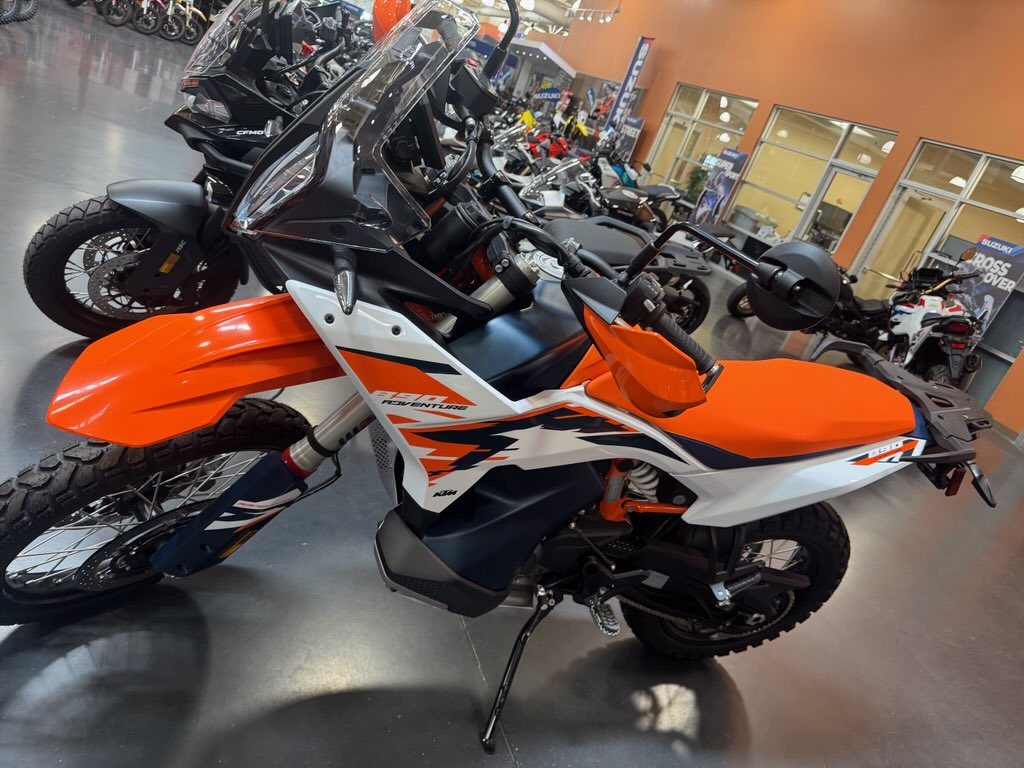
Walk into any dealership with an adventure section and you will see them parked within a few feet of each other: a KTM 890 Adventure R, a Yamaha Ténéré 700, and a CFMOTO Ibex 800 E. Same aisle, same category, same shoppers standing in front of all three.
They are not the same insurance conversation.
One of them lists for around $16,000 and is built to be ridden hard off pavement. One lists for around $11,000 and will have two thousand dollars of aftermarket protection bolted to it inside a month. One lists for around $10,000 and arrives from the factory with the crash bars already on it. Those three facts pull a policy in three different directions — and the differences show up at exactly the wrong time, which is after you have already put the bike on its side eighty miles from pavement.
This is a breakdown of what each of these three machines actually asks of a policy, and where the standard one quietly stops working.
Same shop floor, three different risk profiles
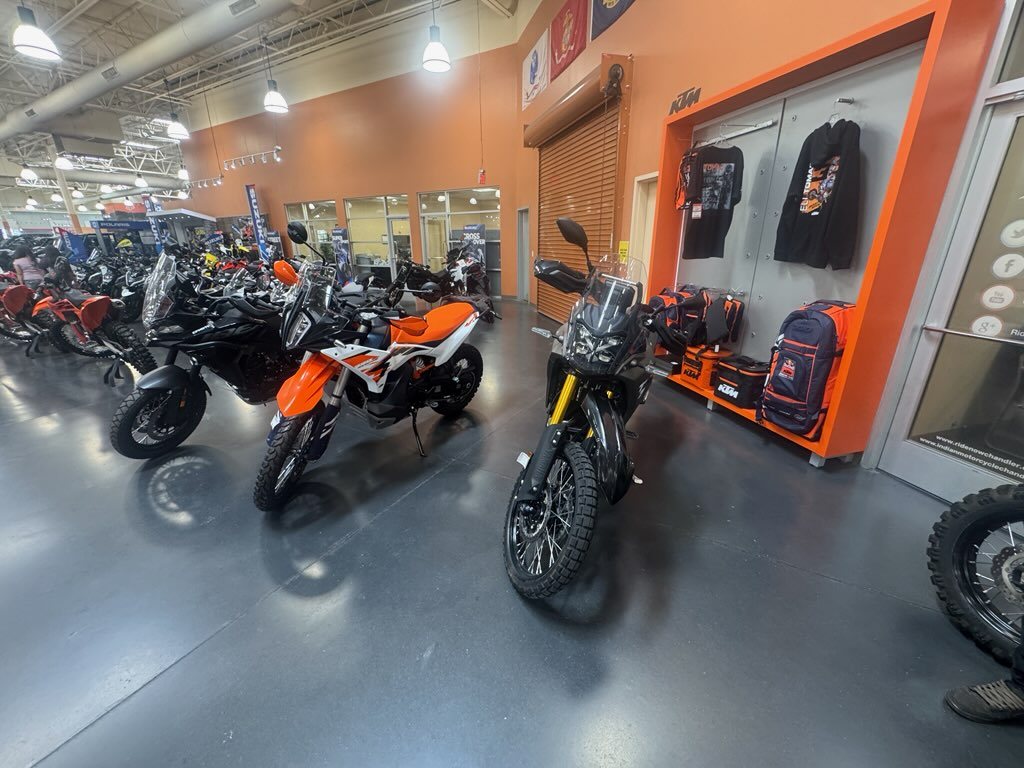
Carriers do not rate a motorcycle on how adventurous it looks. They rate it on displacement, on how the VIN is classified, on what the parts cost, and on how often bikes like it get stolen or written off. The badge on the tank matters less than which of those buckets the bike lands in.
That is why two bikes that look nearly identical on a shop floor can produce different quotes and — more importantly — different exclusions. The 21-inch spoked front wheel on two of these three bikes is not a styling choice. It is a statement about where the bike is going to be ridden, and it is the single best predictor of whether the off-pavement question is going to matter to you.
It is worth being clear-eyed about the baseline risk before we get to the machines. According to NHTSA's Motorcycles: 2024 Data, 6,228 motorcyclists were killed in 2024 — about 16% of all traffic fatalities — and the per-mile motorcyclist fatality rate was roughly 27 times that of passenger-car occupants. Theft is its own separate problem: the National Insurance Crime Bureau recorded 54,736 motorcycle theft reports in the United States in 2022, an average of 4,561 bikes a month, peaking at 6,394 in July. Adventure bikes are not exempt from either number, and they spend more time than most parked in unfamiliar places.
If you have not yet read what adventure bike insurance actually is, start there — this article assumes it.
KTM 890 Adventure R: the one that will actually be off pavement
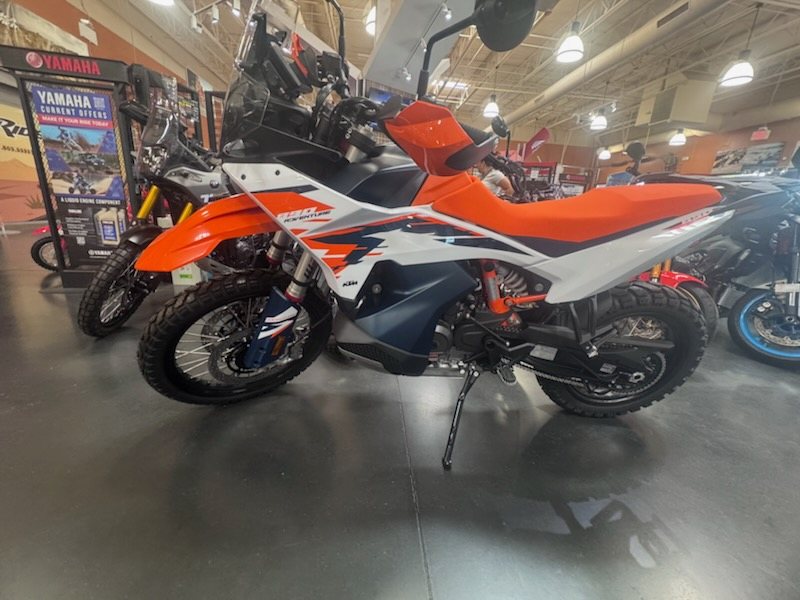
The numbers, from KTM's own technical specifications, tell you everything about how this bike gets used:
- 889 cc parallel twin, 105 PS, 100 Nm
- 240 mm (9.4 in) of suspension travel at both ends — WP XPLOR 48 mm fork, WP XPLOR monoshock
- 263 mm (10.4 in) of ground clearance
- 21-inch front / 18-inch rear spoked wheels with tubeless rims
- 880 mm (34.6 in) seat height, 474 lb fuelled
- Roughly $16,299 MSRP before destination
Nine-point-four inches of travel at both ends is not a bike that occasionally sees gravel. That is a rally-derived chassis, and riders buy it to use it.
The insurance consequence. This is the bike where an off-pavement exclusion is not theoretical. A standard street-oriented motorcycle policy is written around paved public roads; take a claim to a carrier for damage sustained on a fire road and you may find the coverage you thought you had does not reach that far. The bike is designed for exactly the terrain the policy is quietest about. If you own an 890 R and your policy does not explicitly address unpaved riding, you are carrying a machine built for one thing and coverage written for another. Where off-road coverage starts and stops goes through the specific language.
The second consequence is cosmetic damage. At 474 lb with a 34.6-inch seat, this bike gets dropped. Not crashed — dropped. Soft sand at a stop sign, a foot that finds a rut instead of dirt, a loaded bike that goes over on the side stand. Every one of those is a real, ordinary event, and on a $16,000 machine with painted plastics it is routinely a $900–$2,000 repair. That number sits uncomfortably close to a lot of deductibles, which is how riders end up quietly eating a repair on a bike they are fully paying to insure. The deductible you choose on a bike like this is a different decision than it is on a commuter.
The third is replacement cost. At $16,299 this is the most expensive of the three by around $6,000 — a 58% spread over the Ibex. That gap is the whole argument for looking hard at agreed-value and total-loss coverage rather than accepting a depreciating actual-cash-value settlement on a bike you have spent three years setting up.
Yamaha Ténéré 700: cheap to buy, easy to underinsure
The Ténéré is the smallest-displacement bike of the three and, by sticker, the middle one. From Yamaha's published specifications:
- 689 cc liquid-cooled DOHC parallel twin
- 43 mm fully adjustable inverted fork, 8.3 in travel; single shock, 7.9 in travel
- 90/90R21 front, 150/70R18 rear
- 34.4 in seat height, 459 lb wet, 9.4 in ground clearance
- 4.2-gallon tank
- Dual 282 mm front discs with selectable ABS
- One year limited factory warranty
- $10,999 MSRP
Two of those numbers create the insurance problem, and neither is the price.
The 4.2-gallon tank. That is a genuinely small tank for a bike marketed at long-distance dirt travel, and virtually every T7 owner solves it the same way — auxiliary fuel, then a rack to hold it, then luggage, then a bigger screen, then a skid plate, because now the bike is heavy enough that the stock one is not enough. The Ténéré is the bike most likely to have its purchase price matched in accessories over two or three seasons. A rider who insured a $10,999 motorcycle can easily be riding a $15,000 asset without having told anyone.
The one-year warranty. Twelve months is short for a bike bought to be ridden hard and far. A warranty is not insurance and does not behave like it — it covers manufacturing defects, not the consequences of a rock, a fall, or a failure two hundred miles from a paved road. Once month thirteen arrives, everything that happens to that bike is between you and your policy. The cost breakdown for ADV coverage is worth reading against that timeline.
The Ténéré's saving grace is that the smallest engine of the three usually rates the most gently. The trap is assuming a gentle premium means the coverage is sized correctly — the premium is priced against the bike Yamaha sold, not the bike you have built.
CFMOTO Ibex 800 E: the one that arrives already farkled
The Ibex 800 E is the newest name of the three to most American riders, and it inverts the usual adventure-bike ownership pattern. Per the published specifications for the 2026 Ibex 800 E:
- 799 cc parallel twin, 94 bhp at 9,000 rpm, 77 Nm at 6,500 rpm
- KYB inverted fork, 160 mm (6.3 in) front travel; KYB shock, 150 mm (5.9 in) rear
- 110/80 R19 front, 150/70 R17 rear, tubeless
- 509 lb wet, 32.5 in seat height, 5.0-gallon tank
- J.Juan 320 mm dual front discs, Bosch cornering ABS
- Standard from the factory: integrated crash bars, full skid plate, heated grips, heated seat, cruise control, quickshifter, TPMS, LED fog lights, and an 8-inch display with Apple CarPlay
- 24-month limited warranty
- $10,299 MSRP
Read the suspension and wheel numbers again, because they are the honest story here. Six-point-three inches of front travel on a 19-inch front wheel is a road-biased touring setup, not a 21-inch rally chassis. The Ibex 800 E is the most comfortable of these three on pavement and the least interested in the terrain the 890 R was drawn for. It is also the heaviest, at 509 lb.
The insurance consequence is genuinely different from the other two, and most riders get it backwards.
On the KTM and the Yamaha, the crash bars and skid plate are aftermarket parts you bought and bolted on. They are accessories, and they live under an accessory or custom-parts-and-equipment limit — a capped, separately-scheduled bucket. On the Ibex, those same components left the factory attached to the motorcycle. They are not accessories. They are part of the machine, and they are already inside the bike's insured value.
That is good news for coverage and bad news for assumptions. It means:
- You do not need to schedule the Ibex's bars and skid plate as accessories. They are covered as the bike.
- Your accessory limit on an Ibex is therefore available for what you actually added — luggage, nav, comms, a different seat.
- But a total-loss settlement values the whole package as one $10,299 motorcycle. On the KTM, the bike and $3,000 of scheduled protection are two separate arguments; on the Ibex, there is only one, and the factory equipment does not get valued separately just because it is expensive to replace.
Parts and repair time are the second Ibex-specific consideration. A newer nameplate in the US market means a thinner dealer network and a shorter parts pipeline than KTM or Yamaha enjoy. That does not change what a policy covers, but it very much changes how long a repairable bike sits waiting — which is precisely what rental reimbursement and repair-delay provisions exist for, and precisely the coverage riders skip. The two-year factory warranty is the longest of the three, and it is genuinely worth something; it is still not a substitute for a policy.
Where a standard policy goes thin on all three
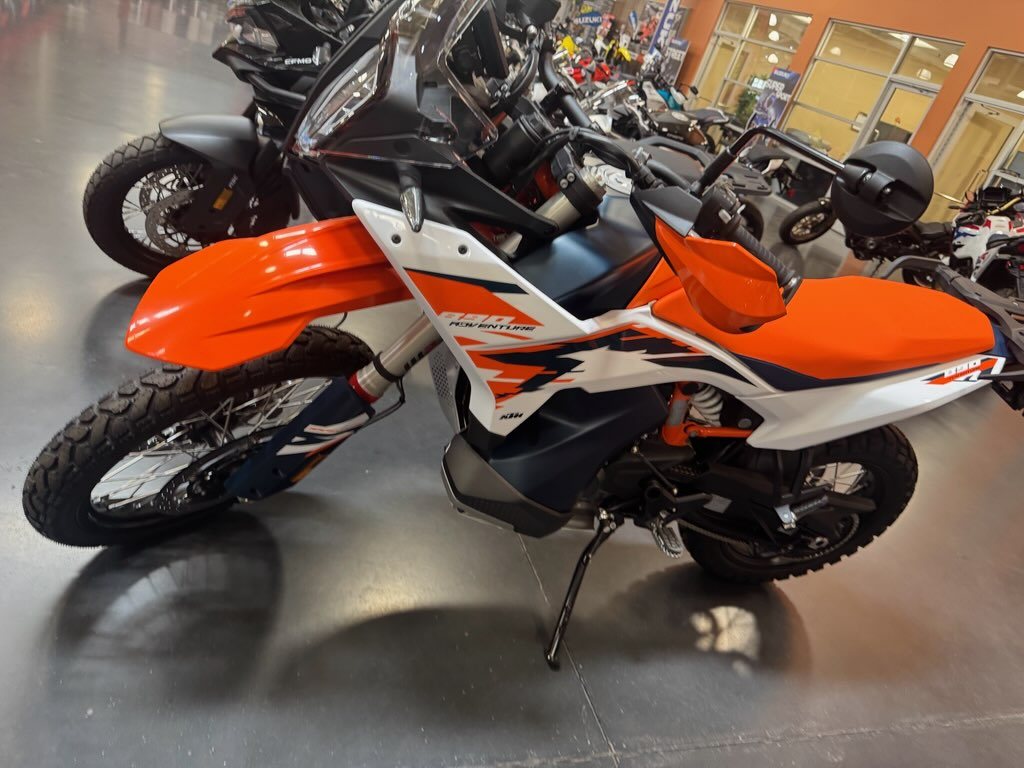
Off-pavement riding
This is the one that catches ADV riders, and it catches them because the language is passive. Most standard motorcycle policies are built around paved public roads. They frequently do not say "we will not cover you on dirt" — they simply never contemplate it, and the exclusion does its work at claim time rather than at purchase time.
For a bike with 9.4 inches of travel and a 21-inch front wheel, that is not an edge case. It is the use case. What you need is a policy that explicitly contemplates unpaved recreational riding, and you need to understand that recreational off-pavement use is a different thing from organised competition — closed-course racing and timed events are excluded nearly everywhere and need a separate event policy. Our comprehensive and collision coverage page covers how this is structured.
Accessories and custom parts
Standard accessory or custom-parts-and-equipment coverage typically starts somewhere between $1,000 and $3,000. Progressive, for example, automatically includes $3,000 of accessory and custom-parts coverage with comprehensive and collision, and will sell up to $30,000 for most vehicle types.
Three thousand dollars sounds generous until you price a real adventure build:
| Item | Typical spend |
|---|---|
| Aluminium panniers with racks | $1,200 – $2,000 |
| Crash bars and skid plate | $500 – $900 |
| Tall screen, handguards, bar risers | $300 – $600 |
| Nav tower, GPS, comms | $400 – $1,000 |
| Aftermarket seat and suspension work | $500 – $1,500 |
| Auxiliary fuel and lighting | $300 – $700 |
A moderately equipped 890 R or Ténéré 700 clears $3,000 without trying. An Ibex 800 E starts lower, because its bars and skid plate are already in the base number — but its owners still add luggage and nav. Either way, the fix is the same and it is administrative: schedule the parts, keep the receipts, and raise the limit. Accessory and custom-parts coverage exists for exactly this, and insuring your farkles walks through how to document a build.
Getting the bike — and you — home
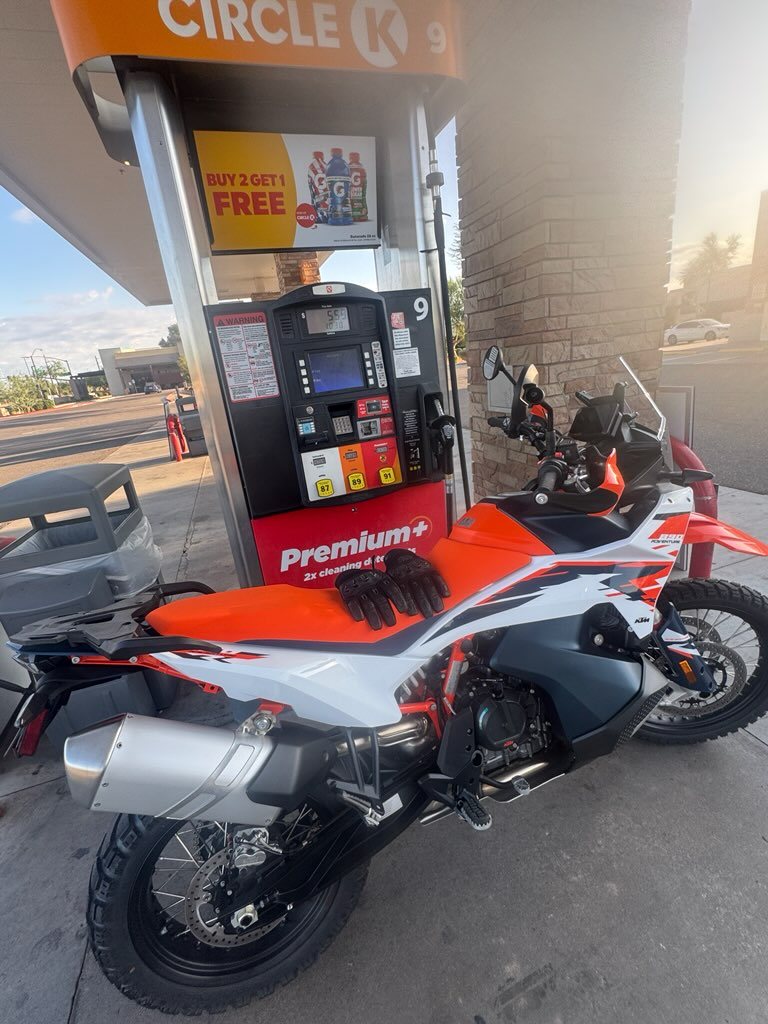
Standard roadside assistance is written for commuters. Tow limits commonly start around 15 miles to the nearest facility — which is a perfectly sensible number in a suburb and a useless one when the nearest dealer that will touch your bike is a hundred and forty miles away across a state line.
Adventure riding routinely puts all three of these bikes further from a qualified shop than a standard tow benefit can reach, and the Ibex's thinner dealer network makes "nearest facility" a longer drive than it would be for a Yamaha. Ask specifically about tow distance and whether trip-interruption benefits — lodging, transport, getting yourself home when the bike cannot — are included and at what cap. Roadside assistance and trip interruption covers what those limits should look like for a bike that travels.
And the gloves in that photo are not a throwaway detail. Riding gear is not covered by the motorcycle's physical damage coverage. A helmet, jacket, boots and armour easily represent $1,500–$3,000 that most riders assume is protected and is not, unless gear coverage is on the policy.
Total-loss math: three bikes, three different arguments
The most consequential difference between these machines is not what they cost to insure per month. It is what happens the day one of them is declared a total loss.
An actual cash value settlement pays the depreciated market value of the motorcycle at the moment of the loss. An agreed or stated value settlement pays a figure you and the carrier established up front. On a bike that has been personalised and hard-used, those two numbers diverge quickly, and they diverge differently for each of these three:
- KTM 890 Adventure R. Highest replacement cost of the three at $16,299 and typically the largest scheduled accessory list. Two separate arguments to win — the bike, and the parts. The most to lose by defaulting to ACV.
- Yamaha Ténéré 700. Lower base value, so depreciation bites proportionally harder, and the accessory list is often larger relative to the bike. The rider most likely to be surprised is the one who insured a $10,999 motorcycle and was riding a $15,000 one.
- CFMOTO Ibex 800 E. One consolidated argument, since the factory kit is inside the bike's value. The open question is how a newer nameplate depreciates and how thin comparable-sales data is — which is exactly the situation where an agreed value stated in advance is worth more than a valuation negotiated afterwards.
The Insurance Information Institute's background on motorcycle crashes is a useful reminder of why this is not a hypothetical exercise on a motorcycle of any kind.
Side by side
| KTM 890 Adventure R | Yamaha Ténéré 700 | CFMOTO Ibex 800 E | |
|---|---|---|---|
| MSRP | ~$16,299 | $10,999 | $10,299 |
| Engine | 889 cc, 105 PS | 689 cc | 799 cc, 94 bhp |
| Front wheel | 21 in spoked | 21 in spoked | 19 in tubeless |
| Suspension travel f/r | 240 / 240 mm | 211 / 201 mm | 160 / 150 mm |
| Wet weight | 474 lb | 459 lb | 509 lb |
| Seat height | 34.6 in | 34.4 in | 32.5 in |
| Fuel | 5.3 gal | 4.2 gal | 5.0 gal |
| Factory protection | none | none | crash bars + skid plate |
| Factory warranty | — | 1 year | 2 years |
| Biggest coverage gap | off-pavement exclusion | under-scheduled accessories | remote recovery and repair delay |
What to actually tell your agent
Whichever of the three is in your garage, the conversation is the same five points. Have the answers ready:
- "I ride this bike off pavement, recreationally, on unpaved roads and trails." Say it in those words, before you buy the policy, and get the answer in writing. Do not let it be discovered at claim time.
- "Here is the list of accessories and what they cost." Itemised, with receipts, and re-sent whenever you add something. An unscheduled $2,000 pannier set is an uninsured $2,000 pannier set.
- "What is my tow distance, and is trip interruption included?" Ask for the number of miles, not the word "included."
- "Is my gear covered, and for how much?" It is a separate coverage. Assume it is not there until someone confirms it is.
- "Can I write this on an agreed or stated value?" Especially on the KTM, and especially on any bike carrying more than a few thousand dollars of your own money in parts.
If you ride across a border, add a sixth — a US policy does not simply follow you south or north, and crossing into Mexico or Canada has its own rules.
Frequently asked questions
Does motorcycle insurance cover riding on dirt or fire roads? Often not. Most standard motorcycle policies are written around paved public roads and either exclude unpaved use or never address it, which produces the same result at claim time. You need a policy that explicitly contemplates recreational off-pavement riding.
Is a KTM 890 Adventure R more expensive to insure than a Ténéré 700? Usually, yes. At $16,299 versus $10,999 the replacement cost is roughly 48% higher, and the 890 R's larger 889 cc engine typically rates above the Ténéré's 689 cc. The gap widens further once accessories are scheduled.
Are the CFMOTO Ibex 800 E's factory crash bars covered like accessories? No — and that is in your favour. Because the bars and skid plate are fitted at the factory, they are part of the motorcycle's insured value rather than items counting against a capped accessory limit. Your accessory limit stays free for what you add yourself.
How much accessory coverage do I get by default? Typically $1,000 to $3,000. Progressive, for instance, automatically includes $3,000 with comprehensive and collision and will sell up to $30,000. A moderately equipped adventure build passes $3,000 easily.
What happens if I drop my adventure bike at a standstill? It is a collision claim, and on these bikes it is the most common one. A tip-over on a $16,299 KTM commonly runs $900 to $2,000 in plastics and levers — close enough to many deductibles that riders end up paying out of pocket on a bike they insure fully.
Does the 21-inch front wheel change my premium? Not directly, but it signals how the bike gets used. The 890 R and Ténéré 700 run 21-inch fronts and genuinely go off pavement; the Ibex 800 E's 19-inch front and 6.3 inches of travel are road-biased. That difference should shape which coverages you prioritise.
How far will roadside assistance tow an adventure bike? Standard programmes commonly start around 15 miles to the nearest facility. That is frequently inadequate for adventure riding, where the nearest qualified shop can be over a hundred miles away. Ask for the mileage figure explicitly.
Is a two-year factory warranty the same as mechanical breakdown coverage? No. The Ibex 800 E's 24-month warranty and the Ténéré 700's 12-month warranty cover manufacturing defects only. Neither covers crash damage, theft, drops, or anything that happens because of how or where you rode.
Does a cheaper bike always mean a cheaper policy? No. Premiums track displacement, vehicle classification, parts and repair cost, and theft and loss history — not sticker price alone. The Ibex 800 E is the cheapest of the three to buy and is not automatically the cheapest to insure.
What should I tell my agent when I insure an adventure bike? State plainly that you ride off pavement, hand over an itemised accessory list with receipts, ask for your tow distance in miles, confirm whether riding gear is covered, and ask whether the bike can be written on an agreed or stated value.
The short version
The KTM 890 Adventure R needs the off-pavement question answered before anything else. The Ténéré 700 needs its accessory list written down before it quietly doubles. The Ibex 800 E needs someone to understand that its factory equipment is not an accessory, and that being further from a dealer is a coverage problem, not just an inconvenience.
All three need an agent who has heard of them and does not flinch when you say the words "fire road."
Get a quote and tell us what you actually ride and where you actually ride it. That is the whole job.